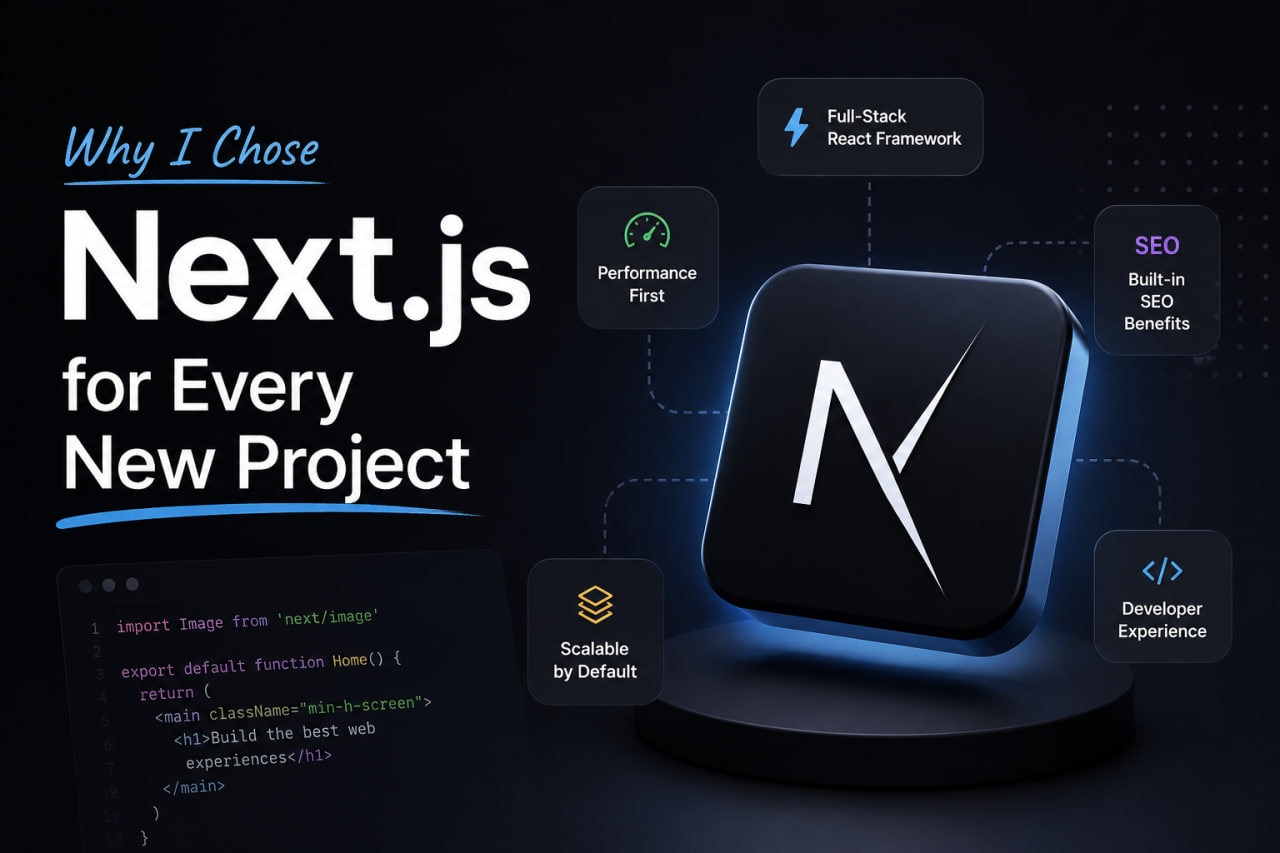
Why Next.js?
When I started building web apps back in 2019, React felt like magic. Component-driven UI, a rich ecosystem, and a huge community — what's not to love? But as projects grew, the cracks started to show. Client-side routing meant blank pages while JavaScript loaded. SEO required extra tooling. Image optimization was DIY.
Next.js solves all of this out of the box.
Server-Side Rendering & Static Generation
The biggest win is flexible rendering. Pages that need fresh data get SSR. Marketing pages and blog posts get statically generated at build time and served from a CDN. The choice is per-page, not per-project.
The App Router
With the App Router (Next.js 13+), React Server Components become first-class. I can fetch data directly in components without client-side loading states for the initial render. This portfolio site you're reading right now is built entirely with the App Router.
Built-In Optimizations
next/imagehandles lazy loading, WebP conversion, and responsive sizes automatically.next/fonteliminates layout shift from custom fonts.- Route-level code splitting happens without any configuration.
The Ecosystem Fit
TypeScript support is excellent. Tailwind CSS integrates seamlessly. Deployment to Vercel is one command. The combination of these tools means I spend more time building features and less time configuring infrastructure.
Conclusion
Next.js isn't perfect — the learning curve for the App Router is real, and some edge cases with caching can surprise you. But for the projects I build: portfolios, e-commerce stores, business web apps — it's the strongest choice I've found.