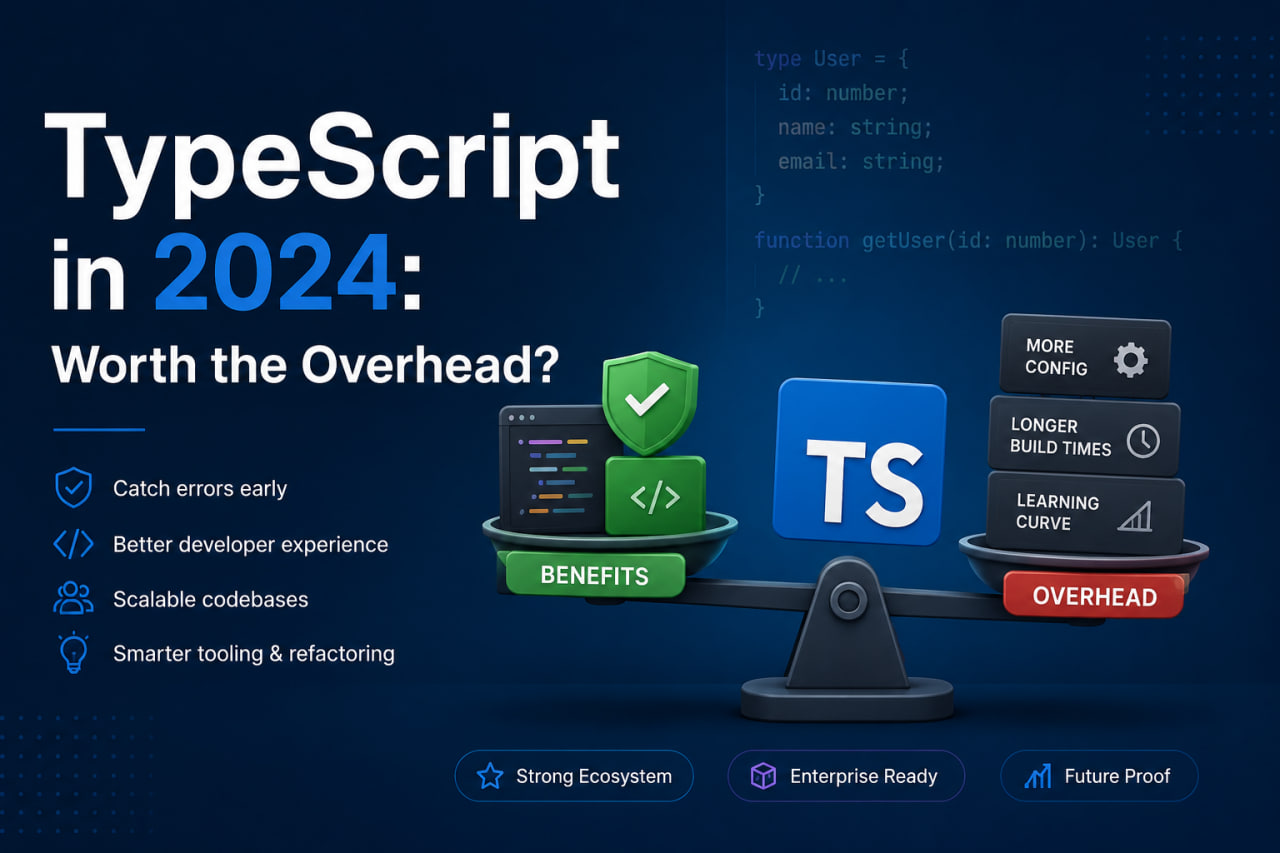
The Honest Overhead
TypeScript isn't free. You need a build step. Type errors slow you down when you're moving fast. Generics can be confusing. Third-party libraries sometimes have incomplete or outdated types.
So why use it?
Catching Bugs Before Runtime
The single biggest value is catching a whole class of bugs at compile time. Null reference errors, wrong argument types, missing properties on objects — these disappear. In JavaScript, these often surface in production and are annoying to debug. In TypeScript, your editor shows them before you even save.
Refactoring Confidence
When I renamed a function or changed a data structure in a large JavaScript codebase, I'd run the app and hunt for runtime errors. With TypeScript, the compiler tells me exactly every callsite that needs updating. Refactors that used to take an afternoon take 20 minutes.
Self-Documenting Code
Good TypeScript types are documentation. A function signature like:
function getProject(slug: string): BlogPost | undefined
tells you everything you need to know without reading the implementation. For teammates (and future-me), this is invaluable.
The Setup Cost Is Low Now
With Next.js, setting up TypeScript is literally just renaming a file to .ts and adding a tsconfig.json. Create Next App scaffolds it for you. The overhead is minimal.
Verdict
Yes, TypeScript is worth it — for any project that will live longer than a weekend. The type safety, refactoring confidence, and IDE experience (autocompletion, inline docs, rename symbols) more than offset the setup cost.