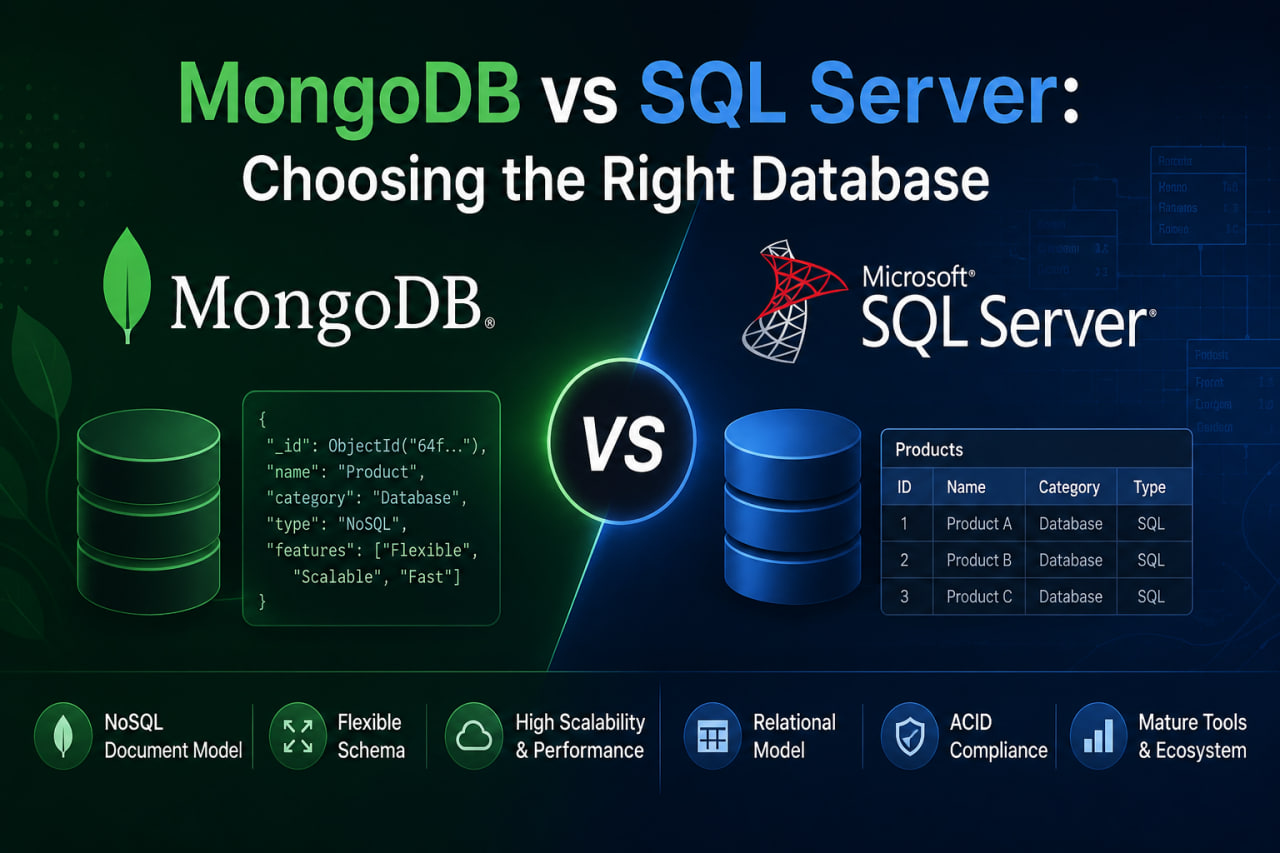
The False Dichotomy
The internet loves to frame this as NoSQL vs. SQL — as if one is objectively better. In my experience building everything from transportation management systems (SQL Server) to real estate platforms (MongoDB), the right choice depends entirely on your data model and access patterns.
SQL Server: When Structure Is a Feature
SQL Server (and relational databases generally) shine when:
- Your data is relational. Users have orders, orders have line items, line items reference products. Foreign keys, JOINs, and constraints ensure integrity at the database level.
- You need complex queries. Ad-hoc reporting, aggregations, multi-table joins — SQL handles these elegantly.
- Transactions matter. ACID compliance is non-negotiable for financial systems, inventory management, and anything where partial updates would cause corruption.
- Schema stability. Your data model is well-understood and unlikely to change radically.
For my transportation software (Web Almas), SQL Server was the obvious choice. Shipments, bills of lading, user accounts — all highly relational with strict integrity requirements.
MongoDB: When Flexibility Is a Feature
MongoDB excels when:
- Your data is document-shaped. Products with varying attributes, user profiles with optional fields, content with nested structures — documents map naturally to these.
- You're iterating quickly. No migrations means you can change your schema as requirements evolve.
- You're working with JavaScript. JSON documents ↔ JavaScript objects is a natural fit, especially with Node.js.
- Horizontal scaling matters. MongoDB's sharding model scales out more naturally than traditional RDBMS.
For Vilanil (real estate platform) and Abiyari (e-commerce), MongoDB was the right call. Products have wildly different attributes depending on type, and the document model handled that without awkward EAV patterns.
The Real Question
Before choosing, ask: "What does my data look like, and how will I query it?" Not "which database is trending?"